
Long Layered
Long lengths with face-framing layers and movement through the ends.

Human hair wigs · The catalog
The full human hair wigs catalog in one place: 7 styles, 10 shades and 4 cap features. Pick a style, a shade and the cap features you want, and we put that exact combination on a sample wig for you to approve.
Supplied wholesale to boutiques, medical wig shops, salons and stylists, custom studios, private label brands, distributors and wholesalers — for the women who wear them, many of them mature women and women with hair loss choosing a natural looking wig for everyday wear.
A wig in this catalog is a combination. Three fields come from the lists on this page, and three are confirmed for the style you pick.


The cut: one of 7 launch styles, short to long, with two fringe styles among them.

One of 10 focus shades, from Champagne Blonde to Grey / Salt & Pepper, in four families: blondes, rooted and blended shades, brunette and natural gray.

One or more of four cap features on the same cap: lace front at the hairline, monofilament at the top, hand-tied through the cap, glueless for fitting.
Set by the cut, from the supply data for that style.
How full the hair is, from the same supply data.
Confirmed per style, with adjustable straps at the nape for fine fitting.
The six fields are also how the wig is named from then on. The sample is made to them, the quote is written in them, and a reorder names the same six fields. Your store and our side read the wig the same way at every step.
Each card opens the style page, and its Request Samples link opens the sample form with that style already entered.
Two fringe styles among them
Long lengths with face-framing layers and movement through the ends.

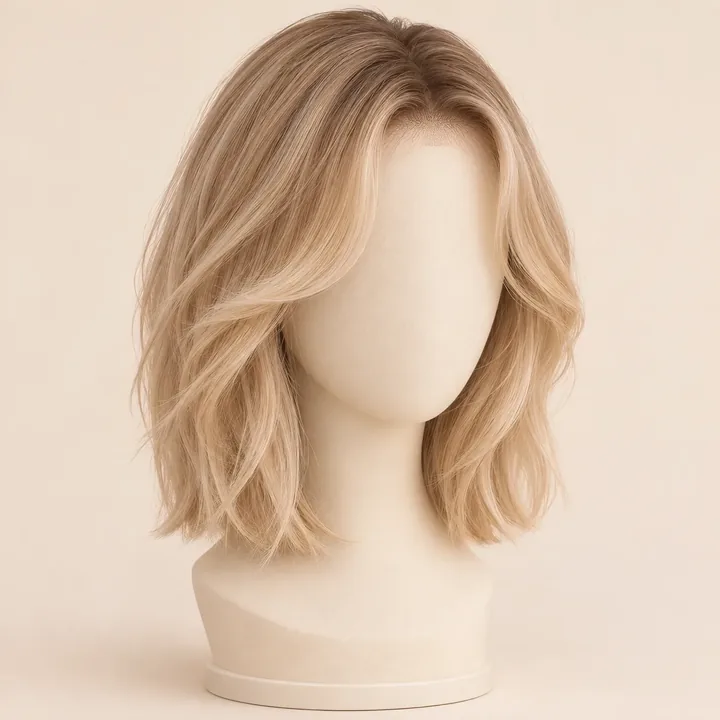
A short, clean shape that sits around the jaw.

A longer bob that rests at the shoulder.

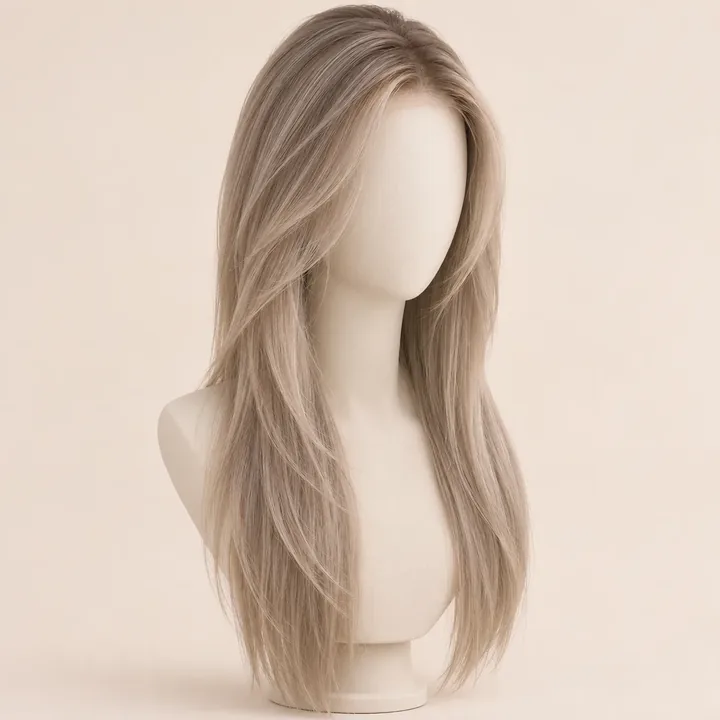
Straight hair with layers cut through the lengths for shape.

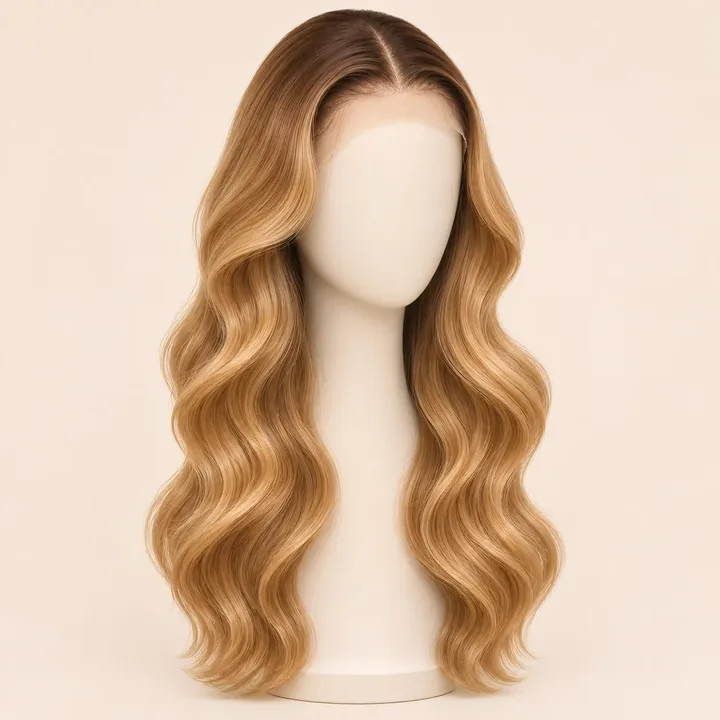
Soft waves for body, without a set curl. Sampled straight from this card.

A straight fringe that sits across the brow.

A fringe split at the center and swept to either side.
Every style can take every cap feature. The pairing still changes what the wig depends on, so the style you choose tells you which cap feature does the most work on that wig.
When the hair is worn back or to the side, the hairline is on show. Each hair is knotted into the lace edge, and the knots thin out toward the brow.
On the sample: the hairline close-up in the daylight photo set shows the lace edge and the density at the front.

These styles depend less on how natural the hairline is. With or without a lace front, a fringe is a natural looking choice for a wearer who would rather not think about her hairline.
On the sample: the fringe length is fixed, and your stylist cuts it in from there.

A center or side part is where a wig is read first. On a mono top the part can be moved in any direction and reads as scalp.
On the sample: the part close-up shows whether any mesh shows at the part.

These styles carry the most hair. A hand-tied cap, often with a monofilament top, keeps the wig lighter and softer through the day.

Glueless fitting, with cap size plus adjustable straps or clips, suits a wearer who prefers no adhesive.

Pairings outside these are made the same way. A Bob with no lace front, or a fringe on a monofilament top, is sampled to those fields like any other wig.
Each card opens its shade page. On rooted and balayage shades, the point where the deeper root gives way to the lighter lengths is set on your sample.
Compare all ten on the Wig Color Chart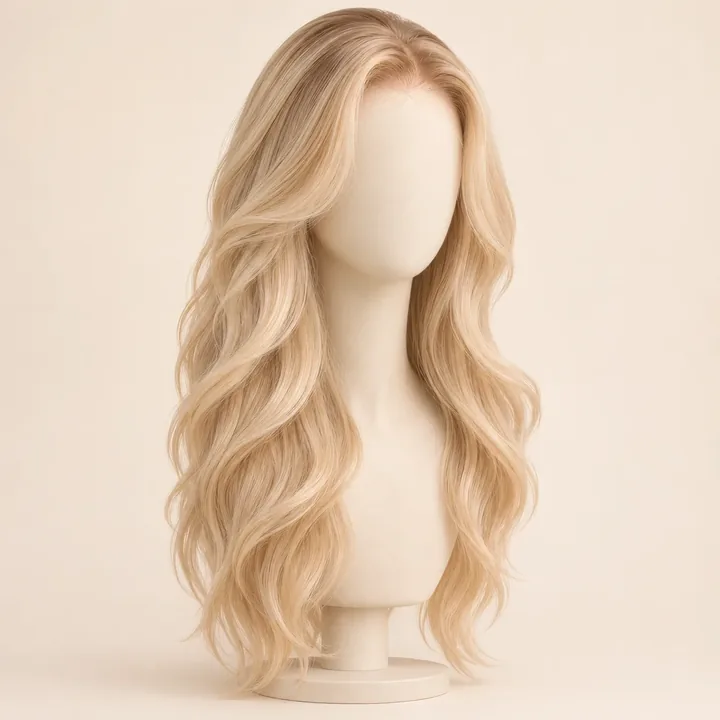 Blondes
A pale, light blonde.
 Blondes
A soft, neutral blonde.
 Blondes
A warm, golden blonde.
 Blondes
A cool blonde.
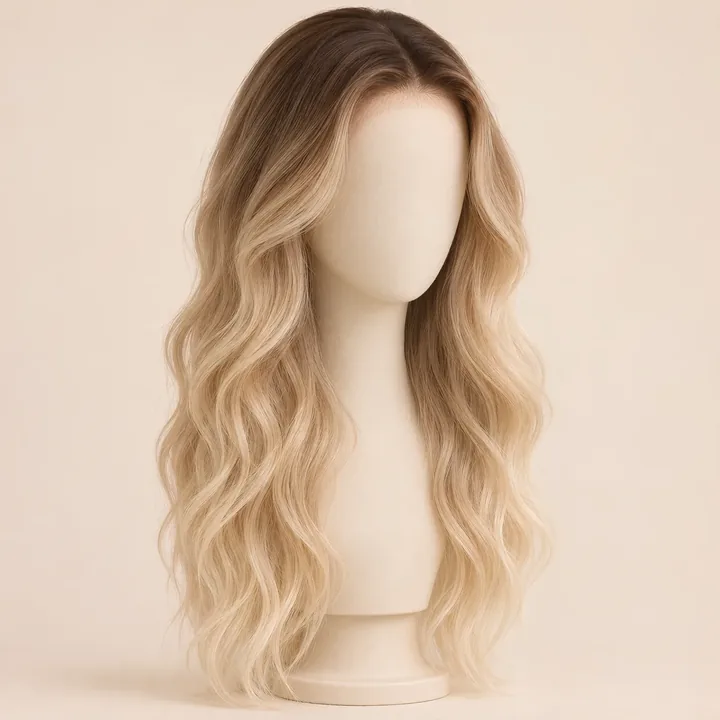 Blondes
Blonde lengths with a deeper root.
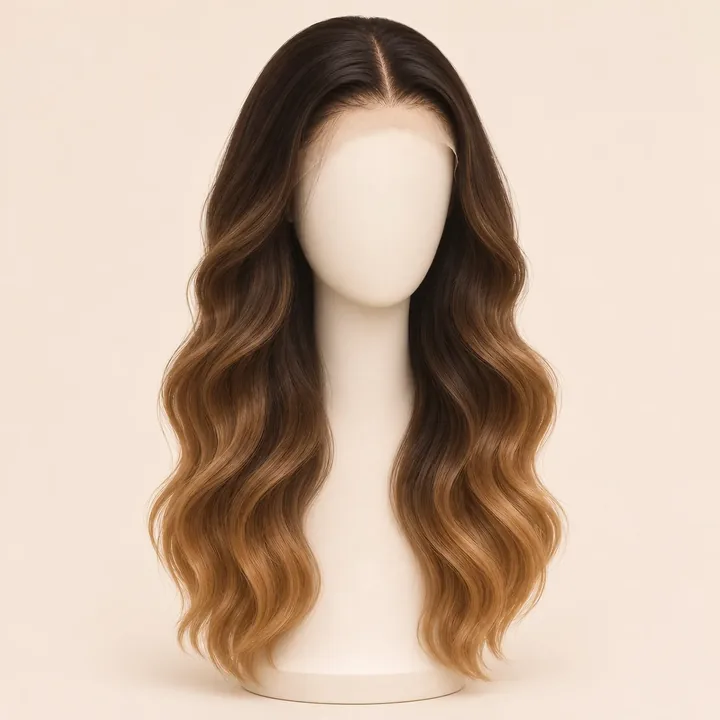 Rooted & blended
A deeper root lifting to caramel lengths.
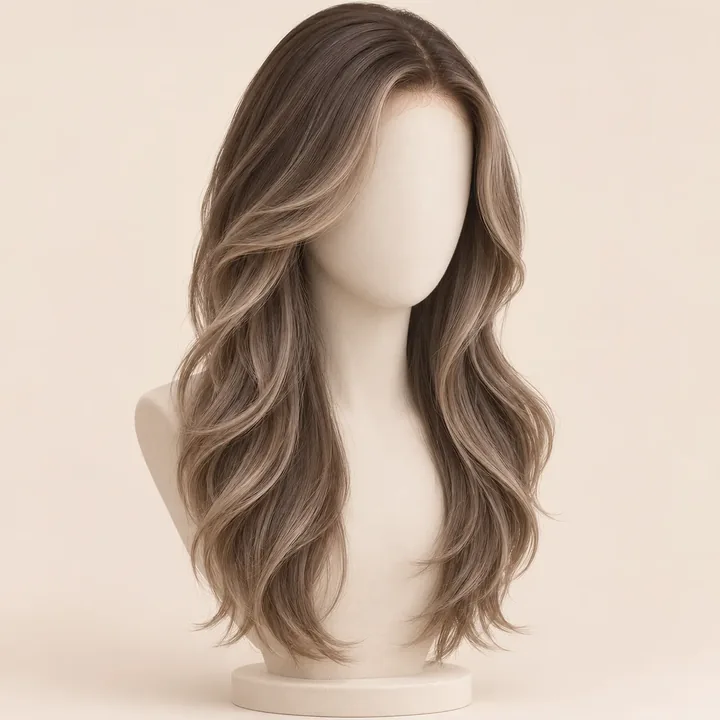 Rooted & blended
A deeper root lifting to cool brown lengths.
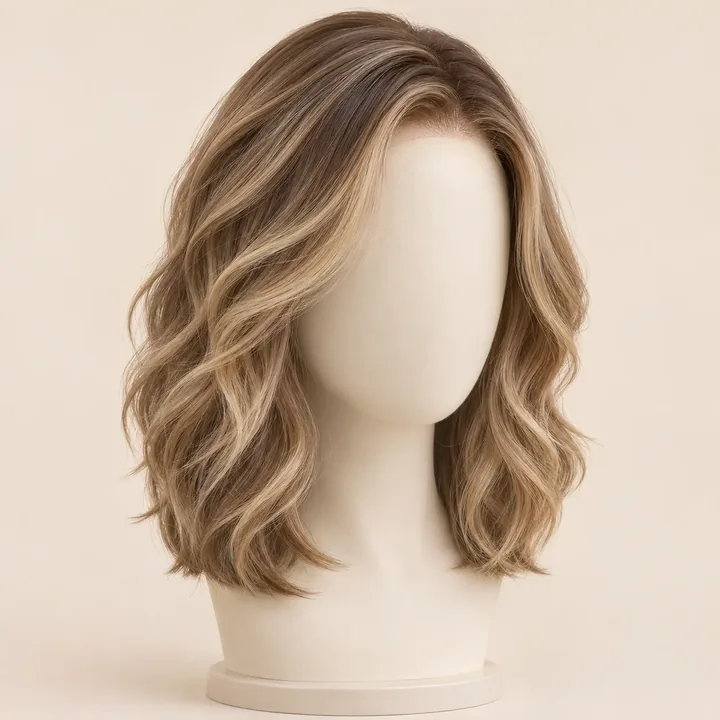 Rooted & blended
A blend of brown and blonde.
 Brunette
A rich brown.
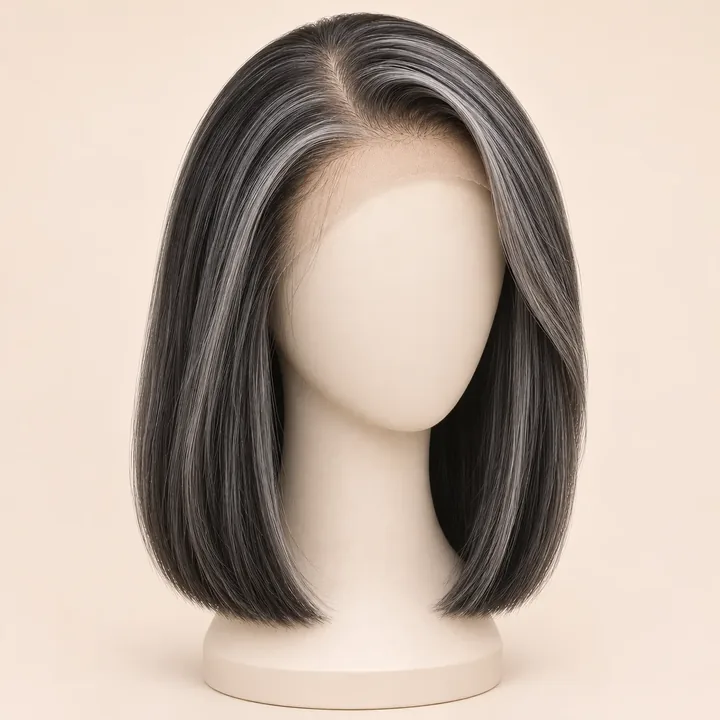 Natural gray
Gray mixed with darker strands, for women who wear their natural gray.


Any style, any shade, any cap combination: sampled to its six fields before it is ordered.
The four features handle different parts of the wig and are combined on one cap. Each card opens its cap page, and its Request Samples link enters that feature on the form.
A lace strip along the brow with every hair knotted in individually, for a natural looking hairline.

A sheer mono mesh over the crown or the whole top, hair knotted through it, so the part can be moved and reads as scalp.

Hair hand-tied strand by strand through the cap, so it moves freely and the cap stays light and soft.

Held by cap size, adjustable straps and clips, with no adhesive.

How the four combine on one cap is covered on the Wig Cap Construction Guide

Stores usually start from what the wearer wants from her wig, then pick the cap. Read from the need to the feature.

Lace front. Add a monofilament top when she also parts her hair.

Monofilament top, alone or on a hand-tied cap.

Hand-tied, often with a monofilament top.

Glueless, with adjustable straps at the nape and clips.

Lace front, monofilament top, hand-tied and glueless on one wig: a natural hairline and part on a light cap with no glue.
The features are combined by you, not sold as tiers. One cap can carry one feature or all four, and the cap on your sample is exactly the combination you asked for. The cap interior view in the daylight photo set shows it, with the straps, clips and size label.
Three of the six fields are not picked from a list. They are confirmed for each style from our supply data, because what is available depends on the cut.
A Bob, a Lob and a Long Layered wig sit at different lengths by design. The length is confirmed when your wig specialist goes through your request, and the approved sample fixes it at the front and at the nape.
How full the hair is across the cap, confirmed per style and visible on the sample at the hairline, where it thins toward the forehead, and at the part.
Confirmed per style. Each cap has adjustable straps at the back of the neck; glueless wigs add elastic bands or clips. A cap that feels loose or snug on your client is marked under fit, and the revised sample is sized to it.
All three are written into your approved sample with the other three fields, so they do not need to be described again at reorder. Wig Cap Sizes & Density Guide


This page is built so the wig you choose here is the wig that gets sampled. Pick a style, a shade and the cap features below and watch the request fill in.
Request Samples on a style card fills in the style; a shade card fills in the shade, a cap card the cap feature. Add the other fields on the form, or pick a second card.
Style, shade and cap construction are your choice. For several combinations, list each one as its own wig on the same request.
Length, density and cap size come from our supply data for that style and are agreed with you combination by combination. Nothing is sampled on a field that has not been agreed.
One sample wig per combination, made in our partner workshops, then shot in daylight, unfiltered, before it travels to you.

You judge the wig in hand against its photos. If a field is off, you mark it and a revised sample is made to your marks.
Once approved, the combination is quoted, ordered and reordered in the same six fields. A distributor restocking it names the style, shade and cap combination, and the wig is made to that approved sample.
The wig on your request, the wig on your quote and the wig in your reorder are the same six fields. A style chosen from a card on this page is never swapped for a near match on the way to your rack.
Most stores stock one cut in more than one shade, and often on more than one cap.


So each one is sampled on its own. An approved Bob in Honey Blonde counts as approved for Honey Blonde on that cap only. The same Bob in Ash Blonde, or with a monofilament top added, is made as a new sample to its own six fields and photographed in daylight on its own.
Several combinations can go on one sample request. Each comes back as its own sample wig with its own daylight photo set, so you can lay the shades or caps next to each other and approve them one by one.
When you approve a new combination, it gets a reference of its own, filed beside the combinations you approved earlier. The earlier combinations do not change: your Honey Blonde Bob is still made to its approved sample when your Ash Blonde Bob is added.
What you get: a range built from this catalog where every style, shade and cap combination on your rack has been seen and approved by you on a wig in hand.

Pick a style, a shade and the cap features from the cards on this page, and we sample that exact wig with its daylight photos.
The catalog works the same way in all three ways of buying from us.
You choose style, shade and cap construction from the lists on this page, and order the combinations you approved. This is the route for boutiques, salons and distributors stocking a rack.

Send reference images and we develop the wig to the same six fields: a cut outside the 7 styles, a shade matched from your client's hair or the wig she wears now, or a cap combination set for one wearer. It is sampled and approved like a catalog wig, and from then on named by its six fields.

Any approved combination can be sold under your own brand. Your labels, tags and packaging direction are agreed order by order, while the wig itself stays fixed by its approved sample.

For a range plan across several styles and shades, send the combinations you are considering. Your wig specialist goes through them with you, field by field.
Discuss Wig DetailsHow choosing from this catalog compares with buying from a typical catalog wig listing.
 |
 |
|
|---|---|---|
| How a wig is identified | Six fields: style, shade, cap construction, length, density, cap size | A product name or item number |
| Shades on a given style | Any of the 10 focus shades, sampled on that style | The shades that listing is stocked in |
| Cap on a given style | Any combination of lace front, monofilament, hand-tied and glueless | The cap that item was built with |
| Length, density, cap size | Confirmed per style and written into your approved sample | Fixed options on the listing |
| Adding a shade or cap to a style you stock | A new sample of that exact combination, approved before ordering | Order the next listing and see it on arrival |
| What you decide from | Your own sample wig and its six daylight photos | Photos of the stock item |
Three guide pages cover the fields in more depth. Read them before you agree length, density and cap size with your wig specialist.

All ten shades compared, with the root position on the rooted shades.

What each of the four cap features does and which ones sit together on a cap.

Size and fullness for each style, and fitting with straps and clips.
To quote a range, we need the wigs written in their fields and a few details about your business. You can copy this list into your request.
Leave length, density or cap size blank if you want them confirmed from our supply data for that style. If you already have approved samples with us, name them by style, shade and cap combination and they are quoted to those samples. Spreadsheets, photos of wigs you stock and plain text all work.


Choose the wigs from this catalog and we take it from there.